DEPOSIT IS 500 EURO AND FULL PAYMENT IS 1800 EURO
Payment plans are made via email with Thomson hockey
(FLIGHTS NOT INCLUDED)
The Dutch Way is designed for:
High-level International players aged 14-23 years of age.
Ambitious club & High school athletes
College-aspiring players
Players who want to understand the game, not just perform drills
This experience is NOT for:
Recreational players
One-off “fun camps”
Families looking for a holiday program
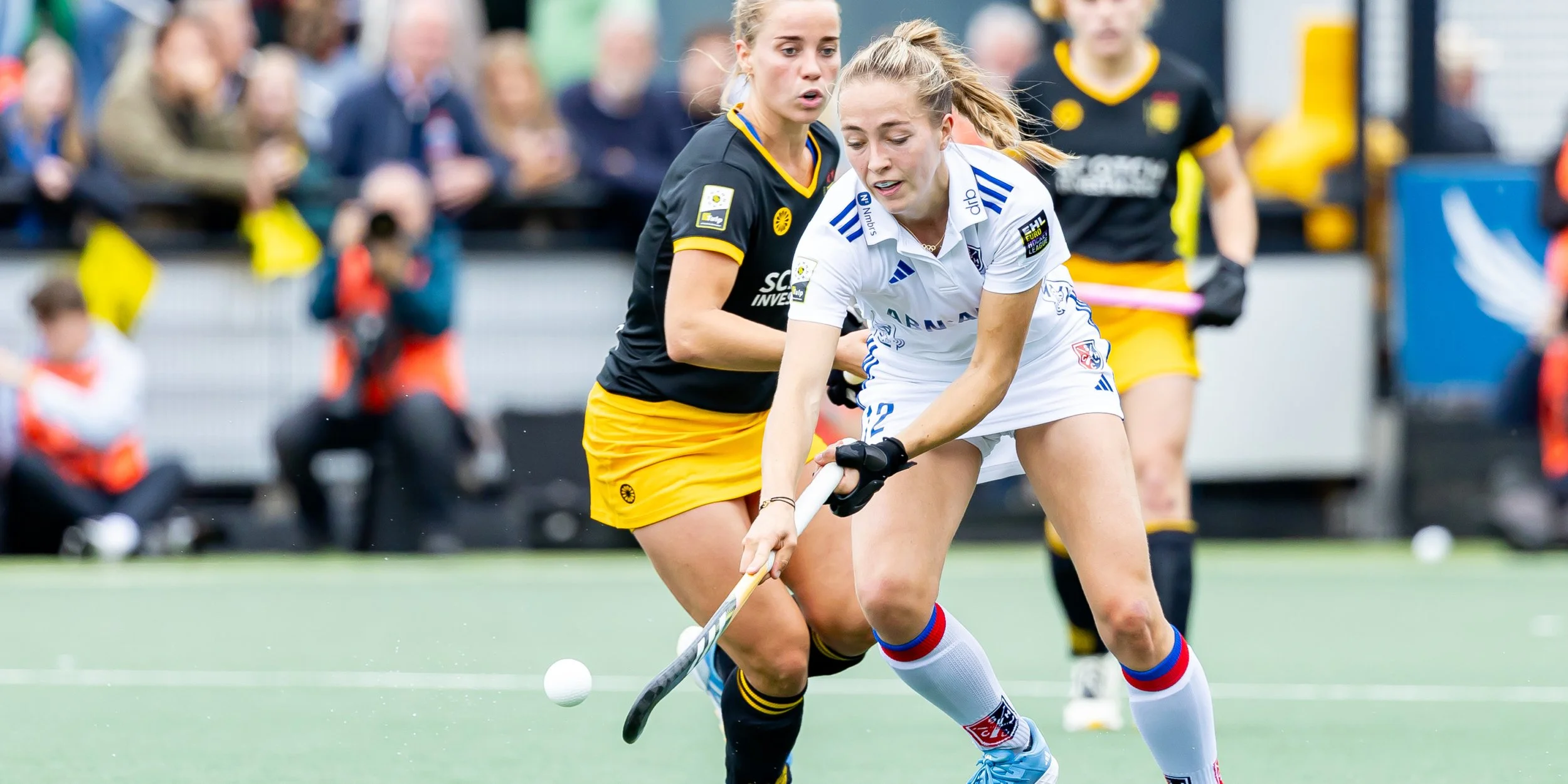
The Dutch Way is a fully residential, elite field hockey experience for international players who want to train inside the world’s leading hockey system.
For one week in July, players live, train, and compete in the Netherlands — working daily with Dutch-based coaches, training at real Dutch clubs, and learning the principles that make Dutch hockey the global benchmark.
This is not a camp.
This is immersion.
Why the Netherlands?
The Netherlands is widely regarded as the best hockey nation in the world — not because of talent alone, but because of how players are taught to think, move, and make decisions.
At The Dutch Way, players learn:
How to play with speed and control
How to move and create space off the ball
How to press, transition, and read the game
How Dutch teams train differently — and why it works
Players don’t just copy drills.
They learn the “why” behind the game.
why we stand out
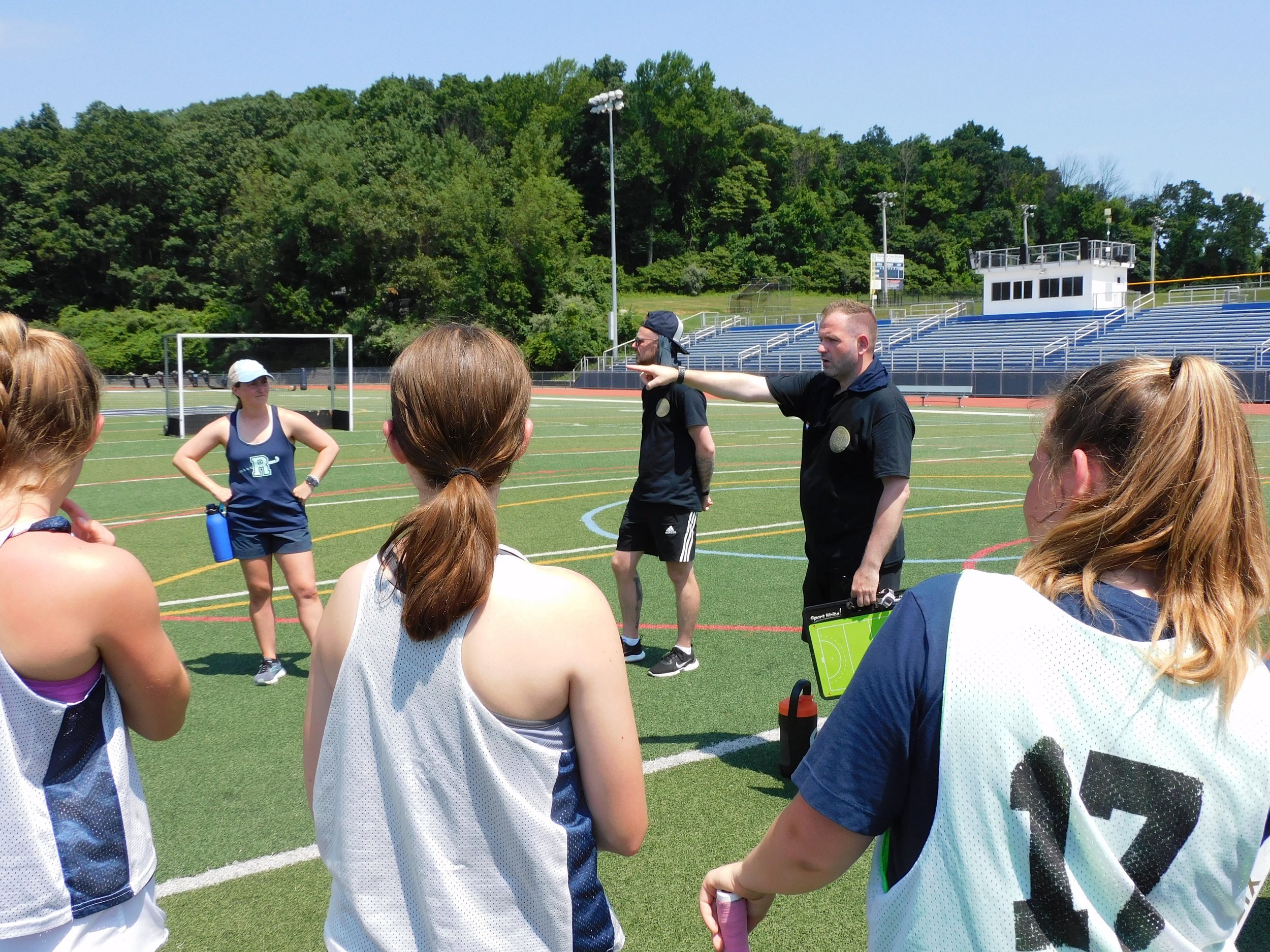
This is not a camp built around drills — it’s built around understanding.
At The Dutch Way, players learn how the game is played and taught in the Netherlands, where decision-making, movement, and game intelligence are prioritized over repetition. Every session is designed to help players read the game faster and play with purpose.
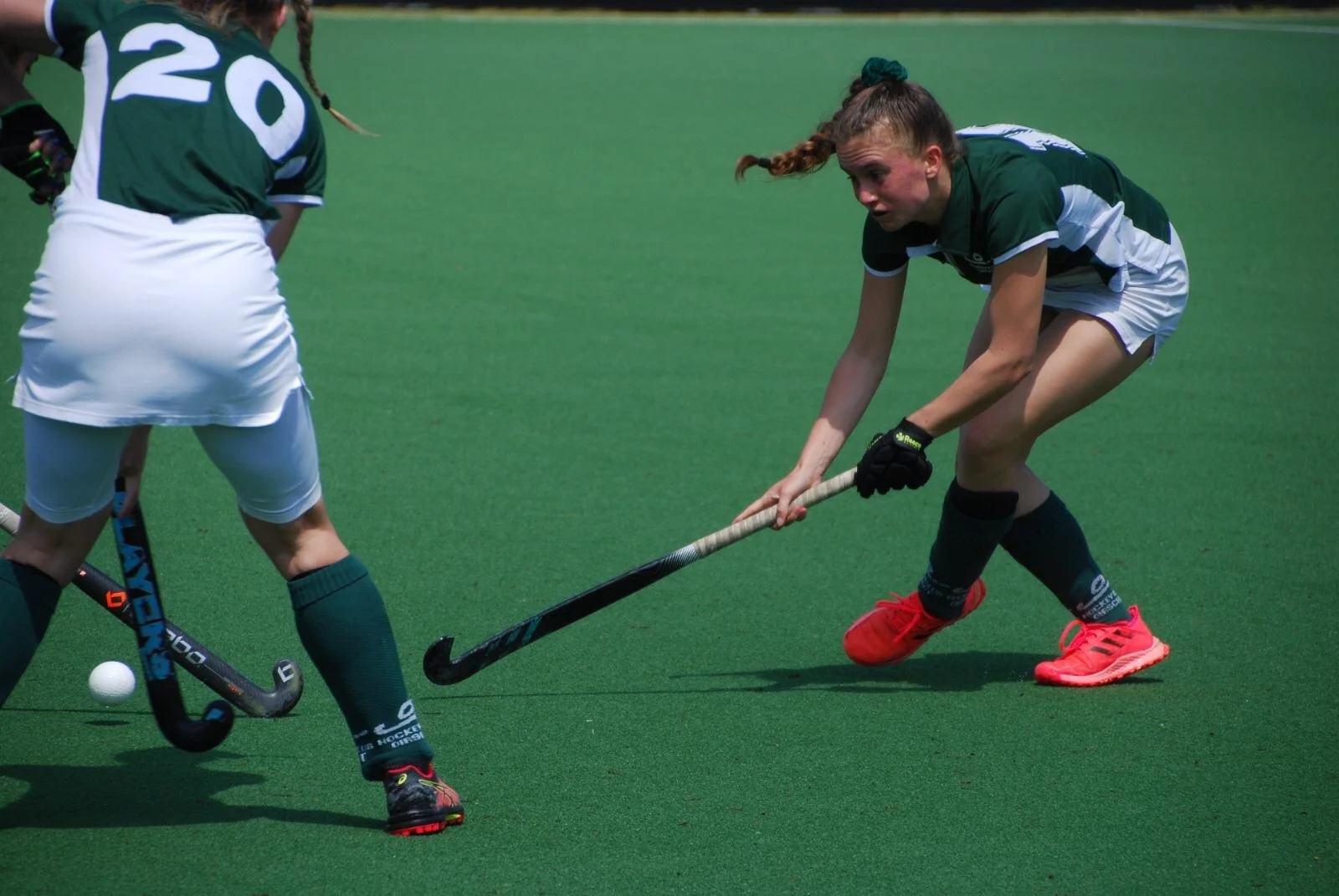
Players don’t just train in the Netherlands — they live the Dutch hockey way.
Training takes place at real Dutch hockey clubs, following the same daily rhythm used in Dutch player development. From on-field sessions to classroom learning and match play, players experience how elite Dutch players are developed from a young age.
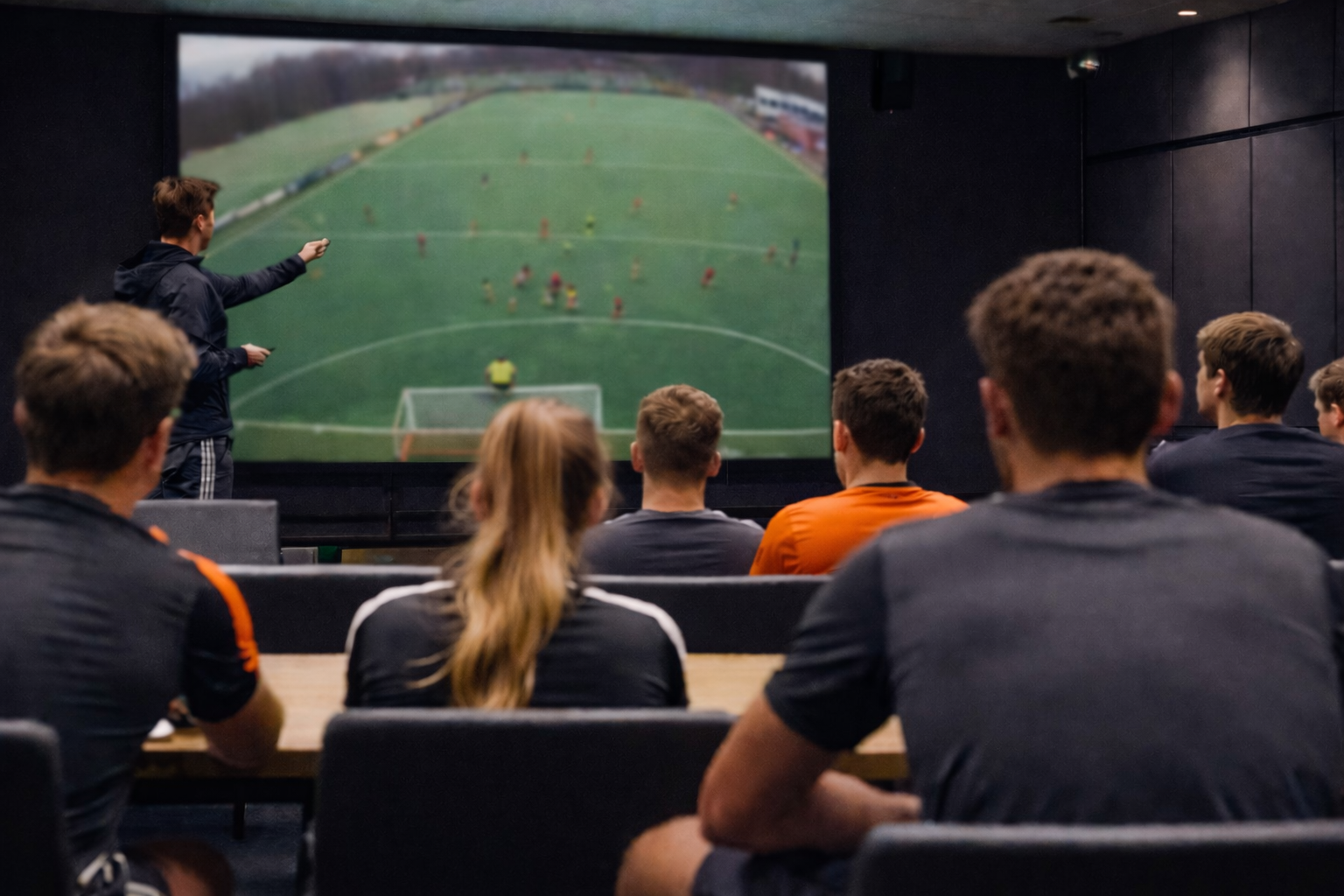
The experience is intentionally small, immersive, and fully supervised.
With limited numbers, shared accommodation, and staff on site at all times, players are treated like developing athletes, not camp attendees. This creates focus, accountability, and a professional environment where real growth happens — on and off the field.
Fun Facts About Field Hockey in the Netherlands 🇳🇱
🇳🇱 Hockey Is a Major Sport in the Netherlands
Field hockey is one of the most popular team sports in the Netherlands.
There are 300+ hockey clubs across the country.
Over 260,000 registered players play club hockey — one of the highest participation rates in the world.
🏆 World Leaders in the Game
The Netherlands is consistently ranked among the top nations globally in both men’s and women’s field hockey.
Dutch national teams are regular Olympic and World Cup medal contenders.
Many international players move to the Netherlands to compete in the Hoofdklasse, widely considered the strongest domestic league in the world.
🧠 The Dutch Development System
Dutch players grow up in a club-based system, not school-based, meaning players train and compete year-round.
From a young age, players are encouraged to:
Make their own decisions
Read the game
Play with freedom and creativity
Coaches focus on game understanding over rigid systems,
especially in youth development.
📹 Video & Tactical Learning Starts Early
Video analysis is commonly used at youth and junior levels, not just elite teams.
Tactical concepts such as pressing, spacing, and overloads are introduced early in a player’s development.
Players are taught to understand why something works, not just how to do it.
⚡ Speed, Skill & Intelligence Over Size
“The Dutch Way” priorities:
Speed of play
First touch and ball control
Intelligent positioning
Decision-making under pressure
Physical size is not the main selection factor —
technical and tactical ability matter more.
🎯 Position-Specific Development
Players regularly receive position-specific coaching at club level.
Rotating positions at younger ages is common to develop all-round hockey intelligence.
Goalkeepers often receive specialised coaching separate from team training.
🏟️ Hockey Clubs Are Social Hubs
Dutch hockey clubs are more than just training facilities — they are community hubs.
Players often eat together after training and matches.
Clubs host social events, matches, and youth activities, creating a strong team culture.
🟠 Creativity Is Encouraged
Young players are encouraged to:
Take risks
Try new skills
Solve problems independently
Mistakes are seen as part of learning,
not something to be punished.
🌍 International Influence
Coaches from around the world travel to the Netherlands to learn from the Dutch system.
Dutch coaches work globally, influencing how modern field hockey is played and taught.
🧡 Why “The Dutch Way” Matters
“The Dutch Way” of field hockey is built on:
Intelligence over instruction
Development over results (especially at youth level)
Long-term player growth
Love for the game
🏆 Dutch Field Hockey Achievements
📍 FIH Field Hockey World Cup
Women’s team: 9 World Cup titles — the most in history.
Men’s team: 3 World Cup titles (1973, 1990, 1998).
🥇 Olympic Games (All Time)
Women
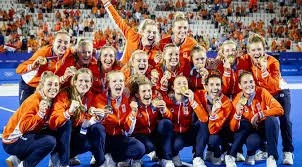
5 Olympic gold medals (1984, 2008, 2012, 2020/Tokyo, 2024/Paris).
2 Olympic silver medals and 3 Olympic bronze medals as well — a total of 10 Olympic medals.
Men
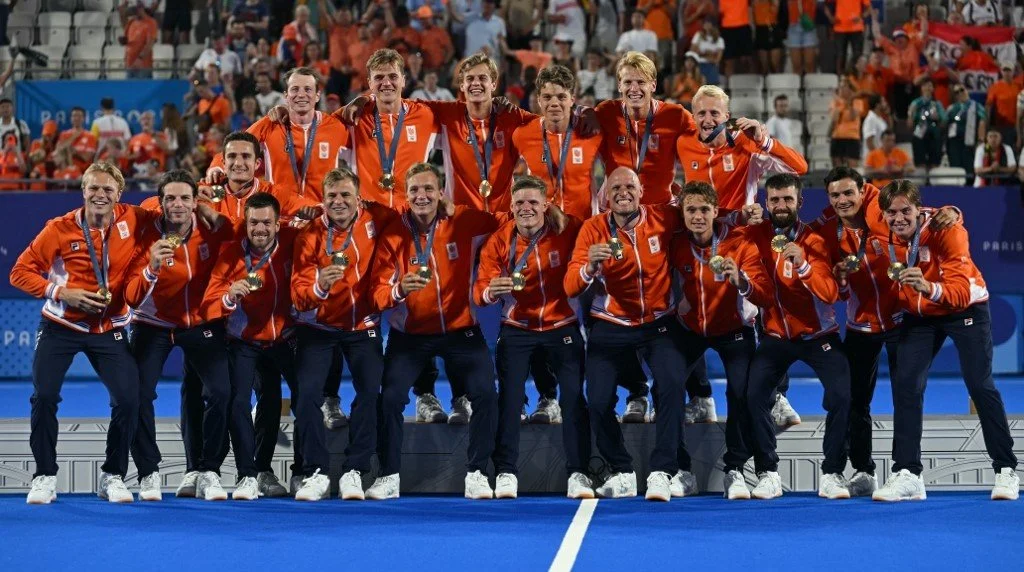
3 Olympic gold medals (1996, 2000, 2024).
This makes the Netherlands one of the most successful
nations in Olympic field hockey on both the women’s and men’s sides combined.
🇪🇺 European Championships
The Dutch women’s team has won multiple EuroHockey titles (often cited as 13).
(Exact count varies slightly by source, but they are historically dominant.)
Men’s and women’s teams have both been strong in European competition,
with the Netherlands widely regarded as a continental powerhouse.
Why This Matters
The Netherlands’ success shows:
Consistent excellence across generations
Deep tactical understanding and training culture
A hockey system that develops elite players at all levels
This legacy is part of the reason “The Dutch Way” is so respected internationally.
This philosophy is what has made Dutch hockey so successful —
and why players from around the world come to train here.
Your Week in the Netherlands
Dates
Arrive-Sunday 24th July 2026
Depart Sunday 31st July 2026
Location
Mixed hockey club Beuningen
Ooigraaf 1 6641 TZ Beuningen NL
Accommodation
At the hockey club there will be state of the art army tents, with lights wooden floors and beds for all our players who attend the camp. Each tent holds 10 players so players can bunk with friends
Meals and drinks
Each day at the club house 3 healthy nutritional meals will be provided apart from that snacks and drinks will be on offer 24 hours a day.
The Facility
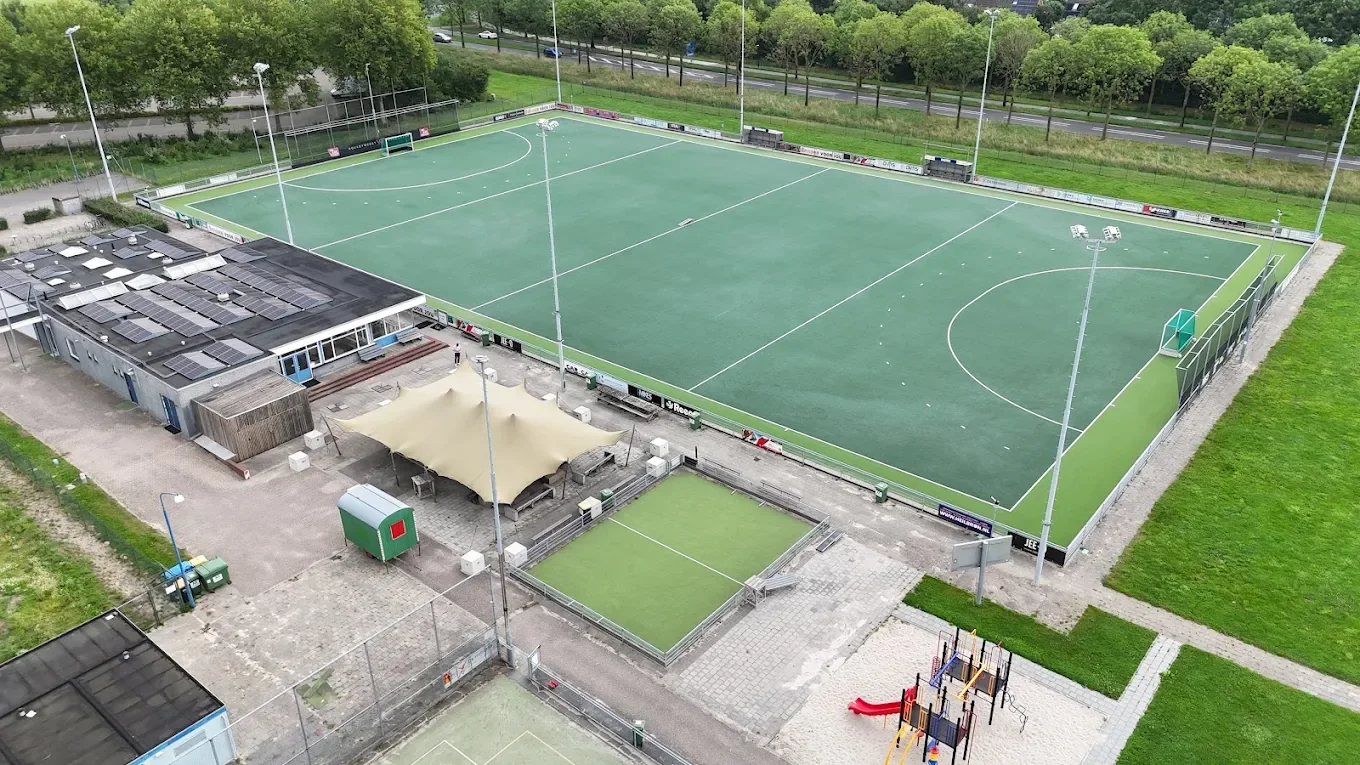
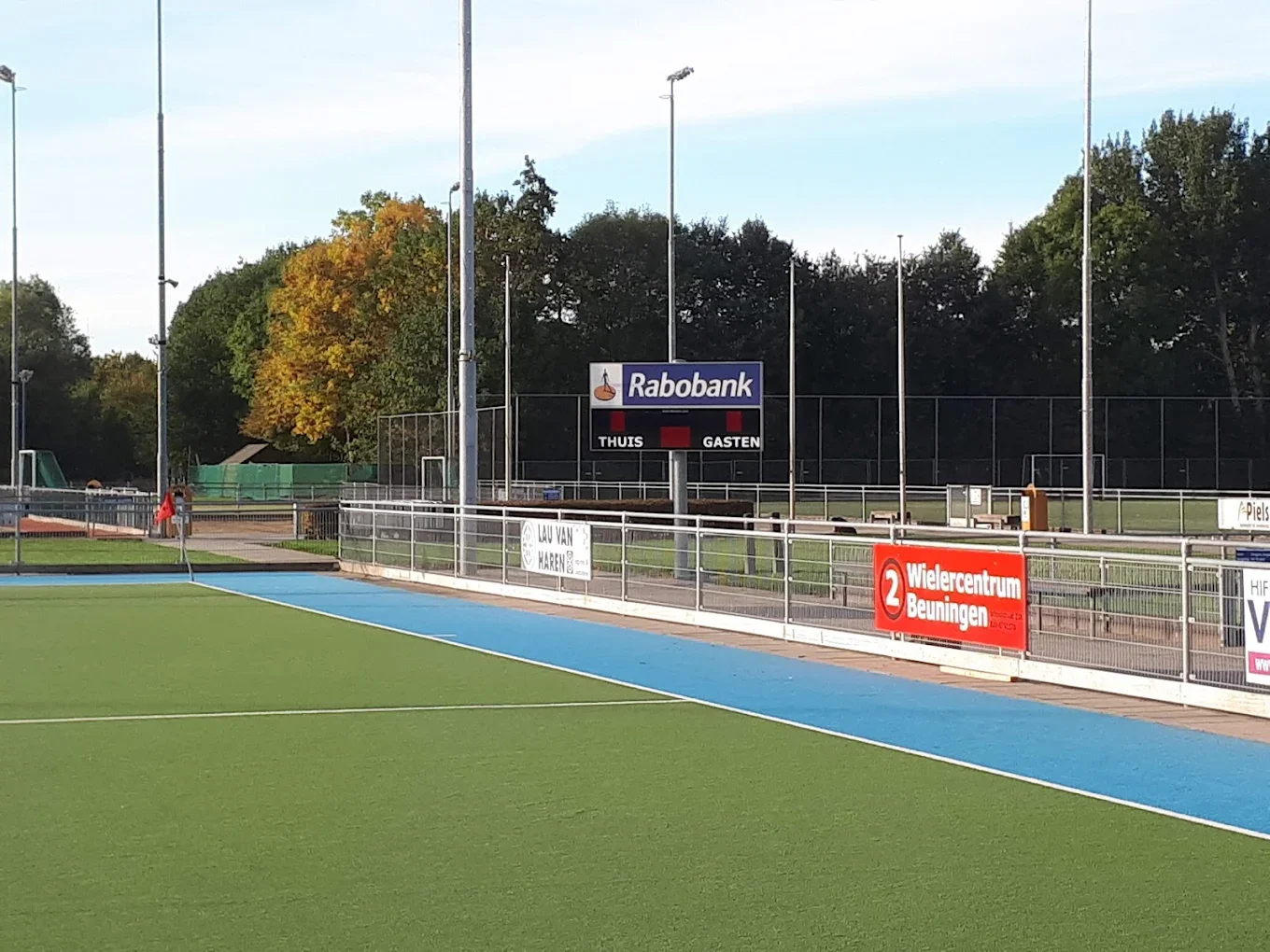
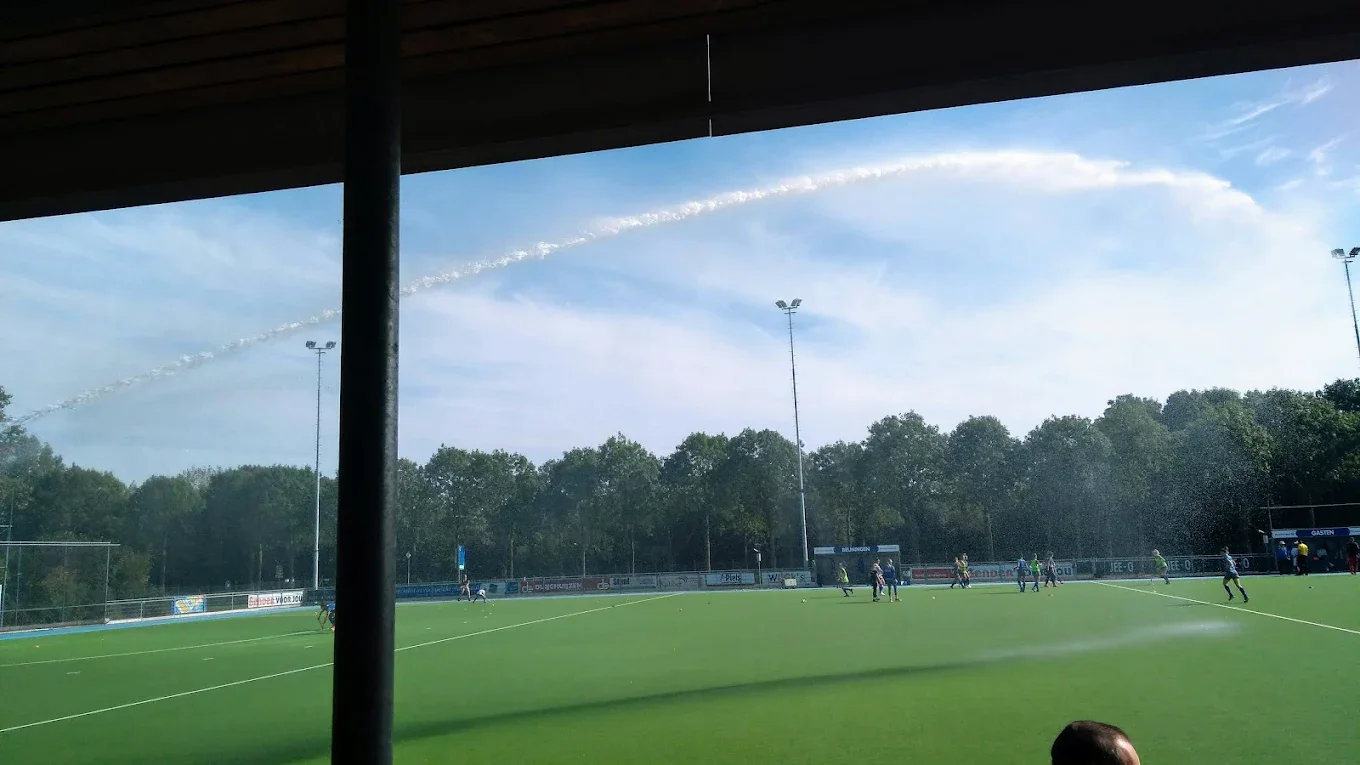
The hockey club is home to 3 full sized pitches including one state of the art water field.
Above the water field is amazing 360 sport intelligence cameras which record everything and will be used during camp for our video feedback sessions.
The club house is modern with seating areas Tv areas and a bar that sells soft drinks and snacks which will be open during the camp.Inside the club house you will also find toilets and changing rooms with hot showers.
Staff and safety
All staff at the is camp are experienced hokey players and coaches and will be delivering a world class experience but more important they will be making sure the players remain safe, at all times staff will be on hand 24 hours a day, our coaches will be staying on campus and will have access to a coach at all times.
Parent Attendance & Involvement
Parents are welcome to attend the experience as spectators and may watch training sessions and matches. Parents may also choose to eat on campus alongside the group if they wish. Please note that meals for parents are not included in the player program and will be charged separately.
This is a fully player-focused development experience, and parents do not stay on campus, participate in training activities, or become involved in the daily camp process.
Parents are responsible for arranging and covering the cost of their own accommodation at a nearby hotel or Airbnb. We are happy to assist with recommendations and guidance on suitable accommodation options in the area.
Parents may also join our organized airport transfers, traveling with the group to and from the airport if desired.
This structure allows players to remain fully immersed in a professional training environment while giving parents the option to be nearby and involved in an appropriate way.
Daily schedule
Breakfast 7.30-9.00am
Group meeting-9.15am
Morning session-9.30am
Lunch 11.30am-1.00pm
Afternoon session-1.15pm
Free time-4.00pm
Dinner-6.00pm
Activities
Bowling
Laser quest
Movie night
Pizza night
Night time match
Saturday city day out
Hockey Content
Advanced Technical Skill Development
High-level technical sessions focused on efficiency, execution under pressure, and game-realistic repetition.
Dutch Training Methodology
Learn how the game is taught and developed in the Netherlands — a system built around intelligence, spacing, speed of play, and decision-making.
Video Analysis & Feedback
Structured video sessions to break down training and match situations, helping players understand positioning, choices, and tactical solutions.
Advanced Tactical Training
Detailed work on team principles, off-ball movement, pressing, build-up play, and game management in different phases of play.
Position-Specific Coaching
Targeted sessions for defenders, midfielders, forwards, and goalkeepers to develop role-specific skills and responsibilities.
Game Intelligence & Decision-Making
Training designed to improve reading of the game, scanning, anticipation, and making better decisions under time and space pressure.
High-Intensity Training Environment
Sessions designed to reflect the tempo, physical demands, and mental focus of elite hockey environments.
Small Group Coaching
Limited numbers ensure individual attention, clear feedback, and meaningful coach-player interaction.
Professional Training Standards
Punctuality, preparation, accountability, and reflection — habits expected in high-performance environments.
International Hockey Experience
Train alongside motivated players from different countries, gaining perspective and exposure to different styles of play
Arrival & Departure Information
Arrival – Amsterdam Airport (Schiphol)
Players should arrive at Amsterdam Airport (AMS) between 9:00 AM and 12:00 PM on the designated arrival day.
Thomson Hockey’s responsibility begins once the player has cleared passport control and entered the public arrivals area, where a member of the Thomson Hockey staff will be waiting to meet them. From that point, players will be supervised and escorted to the group bus transfer travelling directly to the hockey complex.
Departure – Amsterdam Airport (Schiphol)
Departure flights should be scheduled to depart between 3:00 PM and 6:00 PM on the designated departure day.
Our staff will accompany players by bus to the airport and assist them in navigating to the appropriate check-in area. Thomson Hockey’s responsibility ends once the player has checked in and passed through airport security.
Travel Outside the Designated Time Windows
Players arriving or departing outside the stated time windows may be required to:
Wait at the airport until the scheduled group bus arrives, or
Wait at the airport if their departure flight departs later than the group transfer time
Alternatively, players may arrange independent transportation (such as taxi or Uber) to or from the airport. Any independent transport arranged outside the group transfers will be at an additional cost and is the responsibility of the player and their family.
This structure ensures clear supervision boundaries, efficient group travel, and a safe experience for all players.
Frequently Asked Questions
-
Five days of high-performance on-field training, tactical video analysis, and structured recovery, delivered the Dutch way of field hockey
Fully supervised overnight accommodation
All meals and performance-focused snacks included
Continuous supervision from experienced professional coaching staff
Full access to Beuningen Hockey Club’s training facilities and resources
Advanced, position-specific coaching tailored to the demands of the modern game
-
A comprehensive equipment and packing list will be provided after sign-up. In the meantime, athletes should plan to bring:
Full field hockey equipment
On-field training apparel
Comfortable athletic clothing for video analysis and recovery sessions
Appropriate clothing for evening and supervised social activities
Personal toiletries
Reusable water bottle and any personal performance accessories
Small personal music speaker (optional)
Spending money for personal expenses
Electrical plug adapters / converters for European outlets
A detailed packing list will be shared with participants closer to the event date.
-
Yes, there will always be a first aid officer on site at all times
-
Due to the planning, staffing, accommodation, and facility commitments required for this experience, our refund policy is structured around the timing of any cancellation.
The €500 deposit is non-refundable under all circumstances, as it secures a player’s place and covers initial administrative and planning costs.
Cancellations made on or before 31 January 2026
→ Any payments made beyond the deposit will be refunded, minus the non-refundable deposit.
Cancellations made between 1 February and 31 March 2026
→ 50% of payments made beyond the deposit will be refunded.
Cancellations made on or after 1 April 2026
→ No refunds will be issued, as accommodation, catering, staffing, and facility bookings will already be finalised.
If a player is unable to attend due to injury or medical reasons, we strongly recommend families have appropriate travel and cancellation insurance in place. Refunds or credits in these cases cannot be guaranteed.
Thomson Hockey reserves the right to make adjustments to this policy only in exceptional circumstances.
-
A €500 deposit is required to secure your child’s place in the program. The remaining balance is due by the end of April 2026.
We understand that families plan differently, so payment plans are available. Please contact Thomson Hockey to discuss the options that may work best for your family.
-
Minor Illness or Injury
If a player experiences a minor illness or injury (such as muscle soreness, minor strains, colds, or fatigue):
The player may be temporarily removed from training to rest and recover
Camp staff will monitor the player closely
Training participation will be adjusted where appropriate
Parents/guardians will be informed if necessary
Our goal is always to act in the best interest of the player’s health while allowing safe participation where possible.
Medical Treatment & Serious Injury
If a player sustains a serious injury or becomes significantly unwell:
Training will stop immediately for that player
Parents/guardians will be contacted as soon as possible
If required, the player will be taken to a local medical facility for assessment or treatment
Thomson Hockey staff will remain with the player until appropriate care or supervision is in place
All players must have valid medical and travel insurance that covers illness and injury during international travel.
Medication
Players who require medication must be able to self-administer, unless otherwise agreed in advance
Parents must disclose any medical conditions, allergies, or medication requirements prior to the camp
Medication should be clearly labelled and stored responsibly
Return to Training
A player may only return to training if:
They feel physically able to do so
Camp staff consider it safe
Any medical advice received supports a return to activity
Player welfare will always take priority over participation.
Early Departure Due to Illness or Injury
If a player is unable to continue with the camp due to illness or injury and must return home early:
Parents/guardians are responsible for additional travel or accommodation costs
Thomson Hockey cannot guarantee refunds or credits for missed training time
Staff will assist with logistics and communication where possible
Important Note Thomson Hockey staff are not medical professionals. While we act promptly and responsibly in all situations, families are responsible for ensuring players are medically fit to participate and properly insured.
-
We aim to provide nutritious, balanced meals that support high-performance training. We understand that some players may have specific dietary needs and will make reasonable efforts to accommodate these when communicated in advance.
Dietary Information & Disclosure
All special dietary requirements, allergies, and intolerances must be disclosed at the time of sign-up.
This includes (but is not limited to):
Vegetarian or vegan diets
Food allergies (e.g. nuts, dairy, gluten)
Religious dietary requirements (e.g. halal)
Medical dietary needs
Failure to disclose dietary requirements in advance may limit our ability to accommodate them.
What We Can Accommodate
We will work with our catering partners to provide reasonable alternatives where possible.
Meals will be planned to ensure players receive adequate nutrition to support training and recovery.
Where appropriate, players may be offered alternative meal options rather than fully customised menus.
Allergies & Medical Diets
While we take food allergies seriously, we cannot guarantee a completely allergen-free environment.
Players with severe allergies or complex medical dietary needs should ensure they carry any required medication (e.g. EpiPens) and can manage their condition independently.
Parents must ensure that players are medically fit to manage their dietary needs while away from home.
Limitations
Highly specialised or personalised diets may not always be possible.
In some cases, players may need to supplement meals with approved personal snacks, at their own expense.
Thomson Hockey cannot be held responsible for reactions resulting from undisclosed or inaccurately disclosed dietary requirements.
Important Note
Parents and players are responsible for providing accurate and complete dietary information. By registering, families acknowledge that Thomson Hockey will make reasonable efforts to accommodate dietary needs but cannot guarantee full customisation in all cases.
Reach out for more information